Friday, March 9, 2007

New Wellington, FL, Showground Plans

Stadium Jumping, Inc., and its board of directors have unveiled a first look at the proposed new world class showgrounds and facilities that will become a showpiece for the community. The new showgrounds will have one grand prix field of about four acres, and one derby field around five acres. In addition, there will be eight show rings with special riding surface and adjacent warm-up areas. There will also be about six acres of training facilities, to allow riders to prepare their horses adequately. To extend the show season, a large covered arena will allow for night classes and attract different breeds. This multi-use building will have the capacity to also host some small trade shows. This show grounds also has the capacity to comfortably provide parking for 5000 spectators and ample parking for exhibitors, vendors and vans, which represents about 40 acres. Easy access to the site is essential. It provides for over 2200 permanent stalls onsite with supporting facilities such as wash-stalls, grooming areas for horses and bathrooms. There will be extra space available to host the overflow and portable tents and stalls. The total area required to operate a quality event is about 170 acres plus over 30 acres of retention. This is the minimum requirement to maintain and improve a show ground of international standard and reputation.

photo courtesy of Stadium Jumping, Inc.

An Attempt to Save Rare Horse Breeds


Colonial Spanish horses were the horse responsible for the Spanish conquest of the Americas. They changed the culture of Native Americans, were used on cattle ranches measured in miles instead of acres, and moved cattle across half a continent to make cowboy history. "The Spanish colonial horse can go and go," says Phil Sponenberg, who set out three-plus decades ago to help save the breed. The legendary horses arrived with Columbus and Cortez. Columbus left his on the Caribbean islands. Cortez brought 32 to conquer Mexico, and these and later imports multiplied to thousands. In 1680, the Pueblo Indians revolted and stole the horses. From New Mexico, the horses were rapidly traded north. By the time Lewis and Clark headed west, the horse culture had advanced. The Bureau of Land Management (BLM) contacts Sponenberg to identify Spanish-type horses in wild herds to help the bureau conserve the horses. The work has taken him to Wyoming, Montana, New Mexico, North Dakota, and Arizona. His task has been to evaluate the overall conformation of the horses and to assure that good candidate populations follow up with detailed bloodtyping or DNA typing by colleague Gus Cothran at Texas A&M. They have never disagreed. As a result, several new strains of horses have been added to the conservation effort. "Equally important, several strains have been excluded," which also helps conserve the bloodlines, Sponenberg says.

photos courtesy of Phil Sponenberg

More Sightings of Equine Herpes

Agriculture Commissioner of Raleigh Steve Troxler is asking horse owners in North Carolina to watch for symptoms of a highly contagious equine disease following the positive diagnosis of a horse in Virginia. Animal health officials in Virginia and Maryland imposed quarantines Thursday on four horse farms in Virginia and eight in Maryland. Horses on these premises might have been exposed to equine herpes virus, known as EHV-1. The quarantine means that no horses can leave or enter those farms.

Horse Riding Lessons and Boarding near Chapel Hill


Chapel Hill Equestrian is a new business in its first phase of development. It is located on 30 acres of land just one mile north of Route 40 in Chapel Hill, and nestled adjacent to Duke Forest and the Triangle Land Conservancy.
We are in the process of constructing a high quality and beautifully maintained riding facility offering training, riding lessons and full service horse boarding. Group lessons are available on Wednesdays and Saturdays. Private and Semi-private lessons can be scheduled at your convenience 7 days a week 8am-5pm. For information or directions visit: www.chapelhillequestrian.com

photo provided by Chapel Hill Equestrian

Tuesday, March 6, 2007

Countdown to the Best Error in a Horse Ad

21. Appleloosa for sale.

20. Willingly piaffes & massages.

19. Bay 3-yr-old, lightly started, lounges well.

18. Cooked semen available.

17. Welsh filly, pretty head & eye. Just stared over fences.

16. 3-yr-old TB mare, recently startled under saddle.

15. Aged race gelding, has four clean kegs.

14. Rider must sell: horse going to college.

13. Gray pony, very athletic, broke to dive.

12. Small horse farm for sale, 33 acres, large fenced pastures plus three small haddocks.

11. Attractive gelding for Combined Training, ready to brake in the spring.

10. Aged Warmblood mare, no lices. Reasonably priced to good home.

9. Registered Hockey Club mare.

8. Super mover-gloats over the ground!

7. Always in the ribbons over fences & thunder saddle.

6. Select young stock for sale, top scores at insurrection.

5. 1899 filly offered for sale.

4. Oldenburg colt, will manure to 17 hands.

3. Young Hanoverian, started u/s, bumping over small courses.

2. Many sport horses for sale, all apes and sizes.

1. LFG-Live Floral Guarantee.

The countdown above is courtesy of Hunter & Sport Horse Magazine

Equine Research Foundation


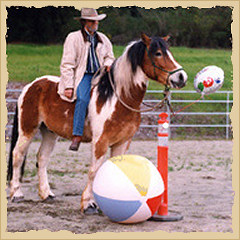
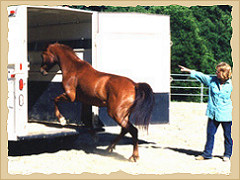
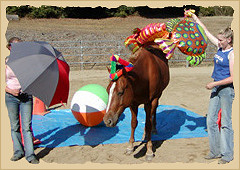
Looking to become involved in groundbreaking scientific equestrian projects? The Equine Research Foundation has a purpose to further scientific and public knowledge about equine learning abilities, perception, behavior, training, care and welfare and, thereby, improve human-horse interactions. All studies are noninvasive and rely on positive reinforcement. It is run by a Board of five Directors and offers riding and learning vacations, internships, clinics and volunteering. For more info:

www.equineresearch.org/index.html
photos courtesy of Equine Research Foundation

Equine Herpes in the States


A horse imported from Germany and treated for fever at a USDA facility has been connected to an outbreak of Equine Herpes Virus – type 1 (EHV-1) affecting 14 horses, half of which have died. The imported horse arrived with 14 others from Germany. After their release from quarantine in various facilities, they were dispersed around the country. Five were shipped to Florida locations. Florida now has seen 13 confirmed cases of EHV-1, 10 in Wellington and one each in Indiantown, Jupiter Farms and Ocala. Of those cases, six horses have died and 10 stables were put under quarantine. California also reported the death of one horse connected to the German imports. Initial signs of infection include high fever, weakness and coordination problems.